A Practical Guide to Bathroom Tile Care
Simple cleaning, ventilation and inspection habits for tiled bathroom surfaces, grout and movement joints.

Master Tiling Services
5 min read
Key points
- Follow the care instructions for the specific tile, grout, sealant and any applied sealer.
- Remove routine water and soap residue before it builds up, using non-abrasive tools.
- Ventilation and regular drying help reduce persistent moisture on finished surfaces.
- Investigate loose tiles, recurring cracks or moisture rather than repeatedly covering the symptom.
Start with the installed products
Bathroom tiles, grout, sealant and any applied sealer can have different care requirements. Keep the product information from the project and follow the manufacturer cleaning instructions.
A cleaner that suits glazed porcelain may not suit natural stone, a decorative surface or a particular grout. When information is missing, test a mild product in a small inconspicuous area before cleaning the whole room.
A simple routine
After the bathroom is used:
- remove pooled water from accessible surfaces
- leave screens or doors positioned to support drying
- run the available ventilation
- pick up hair and residue around drains
- wipe obvious soap or product spills before they dry
Regular light cleaning is usually easier on the finishes than infrequent aggressive scrubbing.
Use suitable tools and cleaners
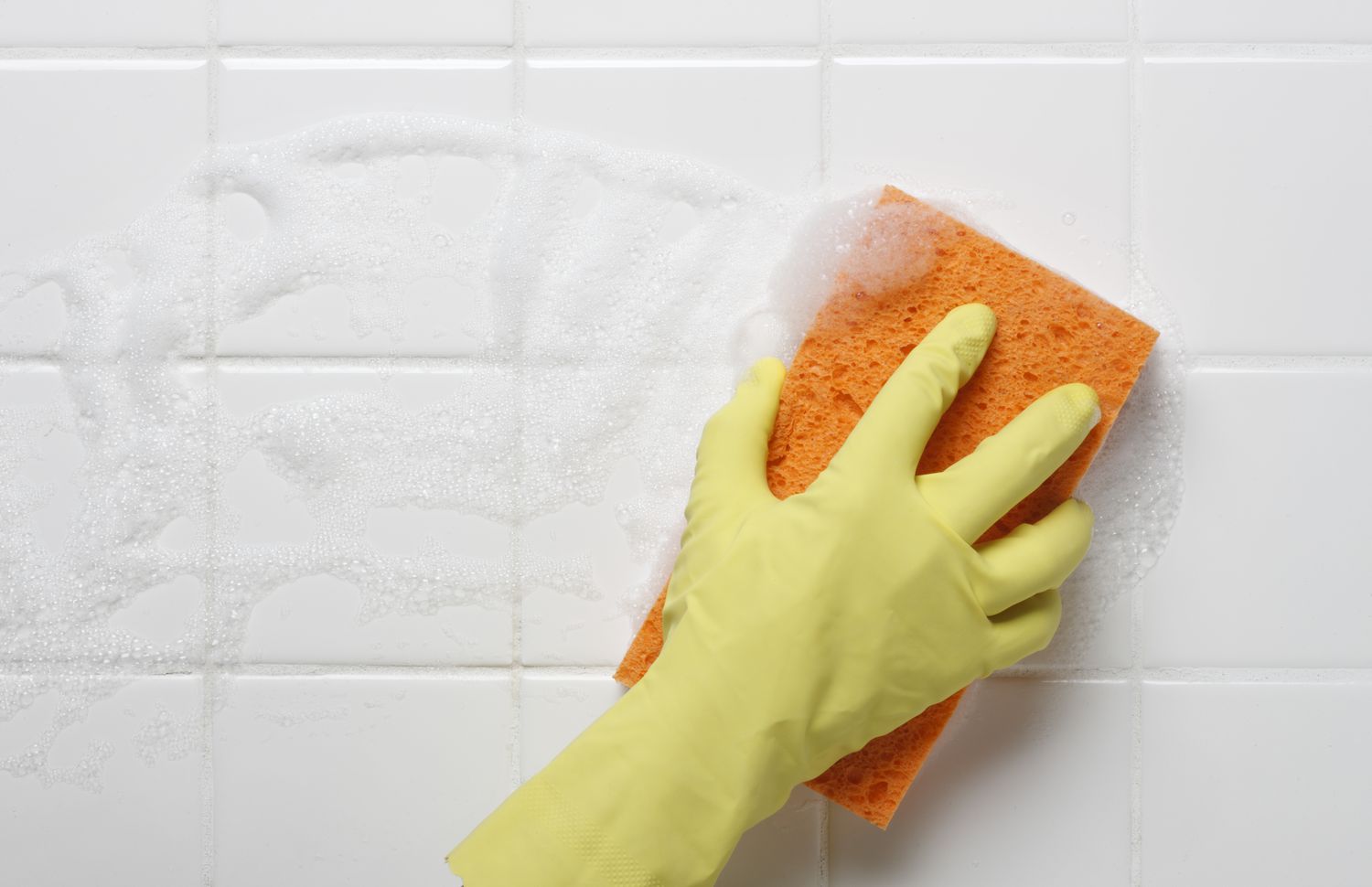
Begin with clean water, a suitable cleaner and a soft cloth, mop or non-abrasive brush. Work in manageable sections and rinse away cleaner residue.
Avoid mixing cleaning products. Do not assume acids, bleach, solvents, abrasive powders, metal scourers or steam are safe for the installed tile, grout, sealant or waterproofed assembly.
Textured tiles may hold residue in their surface profile, so rinse thoroughly and change dirty water rather than spreading it across the floor.
Care for grout and flexible joints differently
Grout fills the regular joints between tiles. Flexible sealant is commonly used at selected changes of plane, movement points or interfaces. They have different roles and should not be maintained as though they are the same material.
Check both during routine cleaning. Discolouration may be surface residue, but recurring cracks, separation, softness or persistent moisture deserve closer inspection.
Do not repeatedly apply new sealant over loose or contaminated material. The condition and cause should be understood before the joint is renewed.
Ventilation and drying
Moisture left on bathroom surfaces supports residue and can make the room harder to maintain. Use the room’s ventilation and allow air to move after bathing.
Clean the exhaust fan grille in line with its instructions and keep vents unobstructed. If condensation remains widespread or the room does not dry, investigate the ventilation and moisture source rather than relying only on stronger cleaners.
Natural stone and sealed surfaces
Some tiles and grout products may be sealed, while others do not need the same treatment. A sealer does not make every surface stain-proof or remove the need for cleaning.
If the original product record is available, check what was applied and the manufacturer guidance before resealing. Applying an unsuitable product can change appearance or trap contamination.
Signs that need more than cleaning
Arrange further assessment if you notice:
- a tile that sounds or feels loose
- repeated cracking in the same area
- sealant pulling away from an edge
- moisture appearing outside the wet area
- persistent odour or growth that quickly returns
- damaged grout near a drain or penetration
- a change in floor level or drainage behaviour
Cleaning can reveal a defect, but it cannot repair movement, moisture entry or an unstable substrate.
Keep useful details
Retain product names, spare tiles and a few photos somewhere easy to find. Note any repairs and the products used. That information is valuable when a tile needs replacing or a joint needs attention later.
If you would like Master Tiling Services to discuss an existing tiled area or new bathroom tiling, send clear photos showing the overall room and close views of the affected detail.

Master Tiling Services
Sydney tiling and waterproofing
Master Tiling Services has more than 20 years of experience in residential and commercial tiling, waterproofing and tiling-led bathroom renovations across Sydney.